Gaming E-Waste in New Zealand
Consoles, gaming PCs, handhelds, monitors, headsets, controllers, routers and batteries contain materials worth recovering and components that can cause harm when handled poorly. A device that still works is not yet waste; it may be repaired, passed on or sold. Once equipment is broken or unwanted, the route matters. Ordinary kerbside recycling is not designed for the mixed materials, circuit boards and batteries inside electronics.
New Zealand has no complete national e-waste dataset. A Ministry for the Environment consultation estimated roughly 80,000–100,000 tonnes of e-waste generated annually and cautioned that collection and disposal data have gaps. A separate 2024–26 work programme used an estimate of 99,000 tonnes and said 98% went to landfill or illegal disposal. These are estimates for all electronics, not gaming equipment alone. Ministry consultation; waste work programme.
Extend useful life before planning disposal
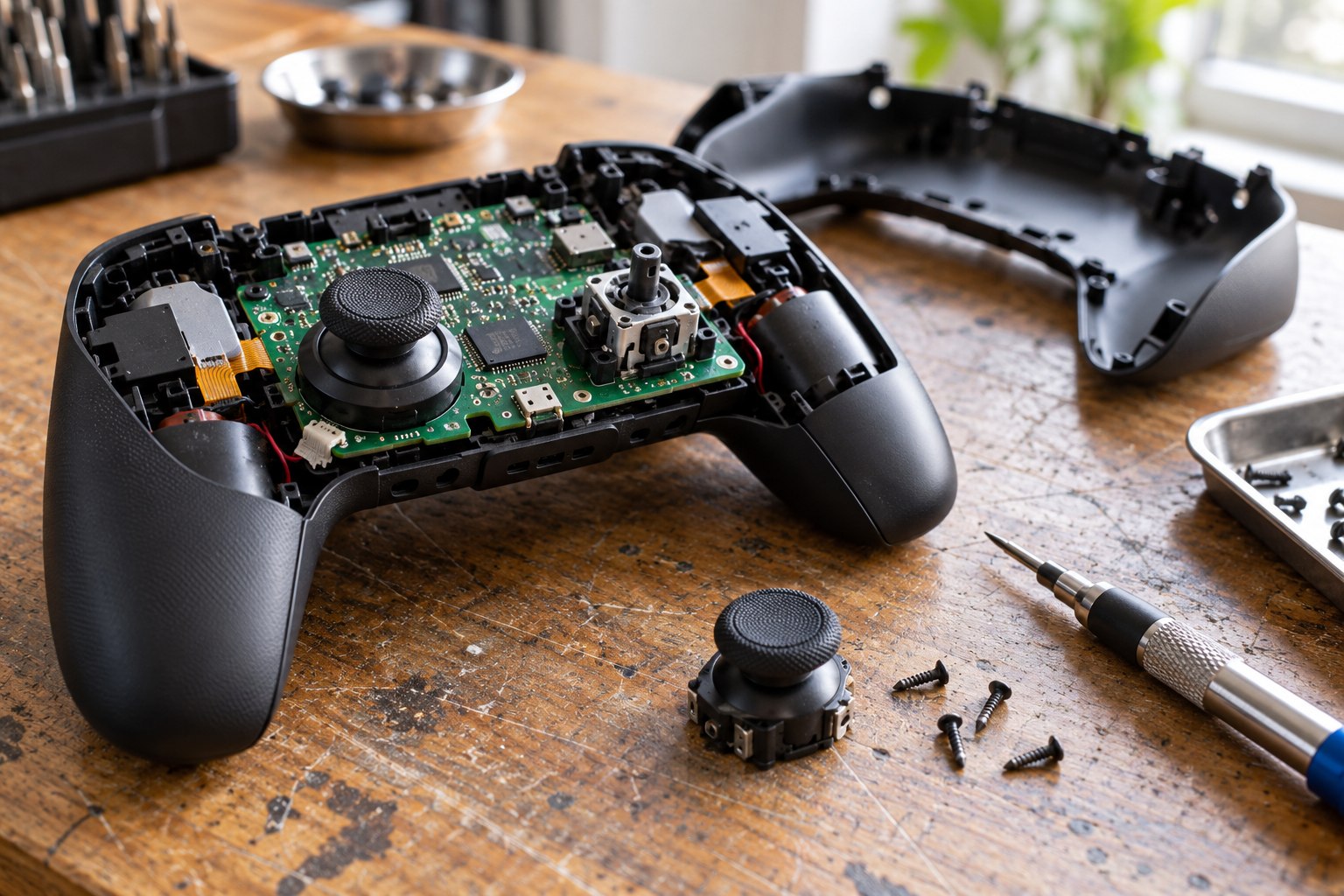
Repair avoids replacing an entire product when a smaller part has failed. A controller with worn sticks, a laptop with degraded storage or a desktop with an ageing graphics card may still have years of useful service. Repairability varies with parts availability, fasteners, adhesives, diagnostic tools and manufacturer support. A design that can be opened safely and repaired with common parts gives owners more options than a sealed device with no service route.
Upgrades have their own material cost. Replacing a graphics card, memory module or storage drive can extend a desktop’s life, while a new power supply or motherboard may make an older case incompatible. Before replacing a complete PC, identify the fault and check compatibility across the proposed upgrade chain. A single unsupported component can turn a small repair into several purchases.
Second-hand transfer works best when the equipment is reliable, complete and honestly described. Include the power adapter, cables and any proprietary receiver needed to operate the item. A console without a controller or a wireless headset without its dongle can have lower reuse value even when the main unit works. Securely remove accounts, saved payment details and personal files before passing equipment to another user.
Keep devices out of the wrong collection stream
Electronics should not go into a kerbside recycling bin unless the local council explicitly accepts a specific item. Loose batteries, swollen battery packs and damaged electronics need special care because short circuits can start fires in collection vehicles or processing facilities. Tape the terminals of removable batteries where the collector requires it; do not dismantle a damaged lithium battery pack at home.
New Zealand recognises electrical and electronic products, including batteries, as a priority product category under the Waste Minimisation Act framework. Priority status provides a basis for product-stewardship regulation and shared end-of-life responsibility. It does not mean every gaming product already has a universal, no-cost take-back route. Collection coverage, accepted equipment and fees vary by scheme, retailer, council and item type.
| Equipment | First route to check | Detail to verify |
|---|---|---|
| Working console, PC or monitor | Repair, resale, donation or refurbishment | Condition, accessories, data removal and safe transport |
| Computer, laptop, network equipment | Local e-waste drop-off or ICT recovery scheme | Accepted brands, collection fee and data-handling terms |
| Television or large display | Council or specialist electronics recycler | Screen type, size limits, transport and charges |
| Loose or damaged battery | Battery-specific collection point | Battery chemistry, packaging and damaged-item rules |
| Cables and peripherals | Electronics collector that lists those items | Whether cords, docks, headsets and controllers are in scope |
Check what a recycling claim covers
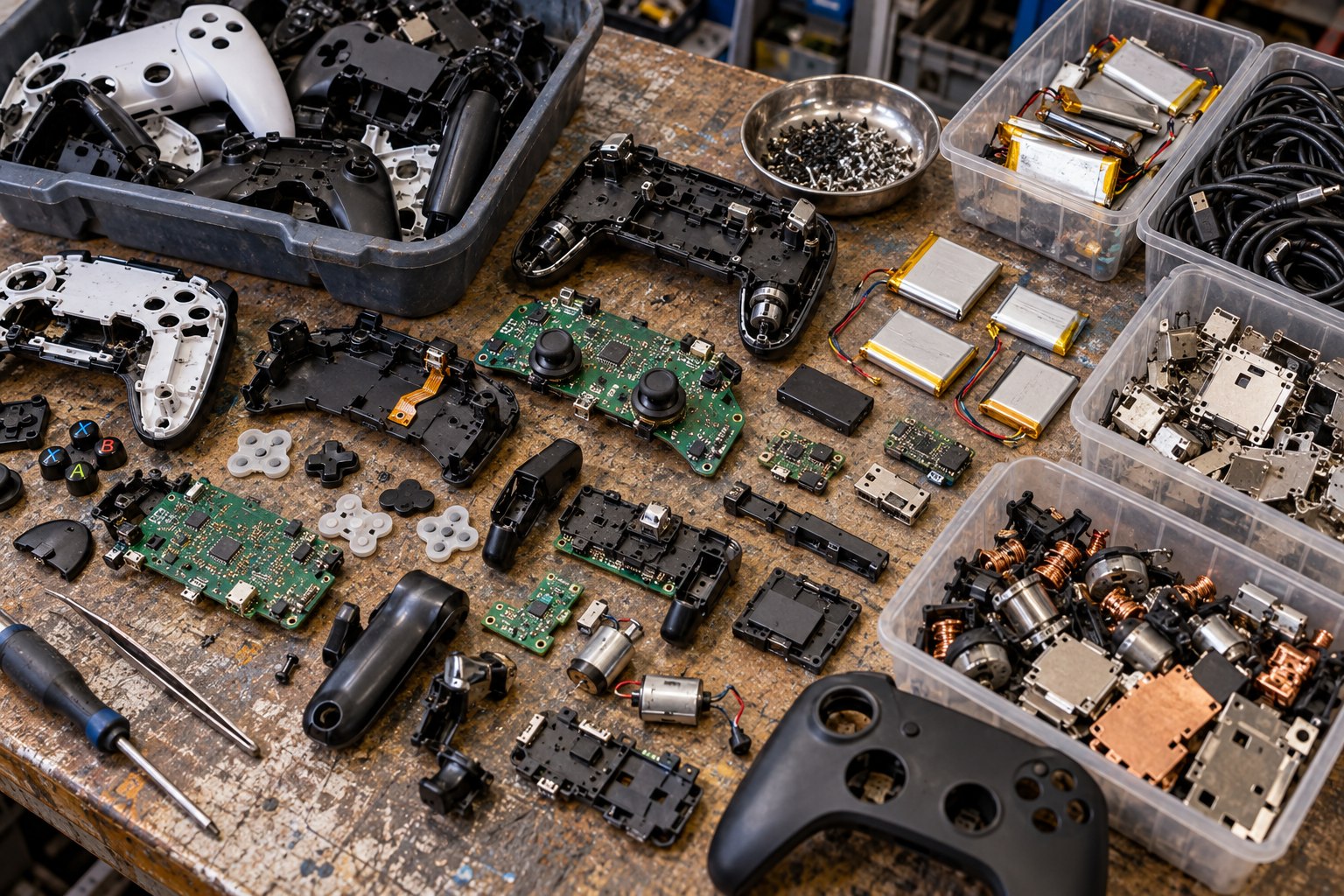
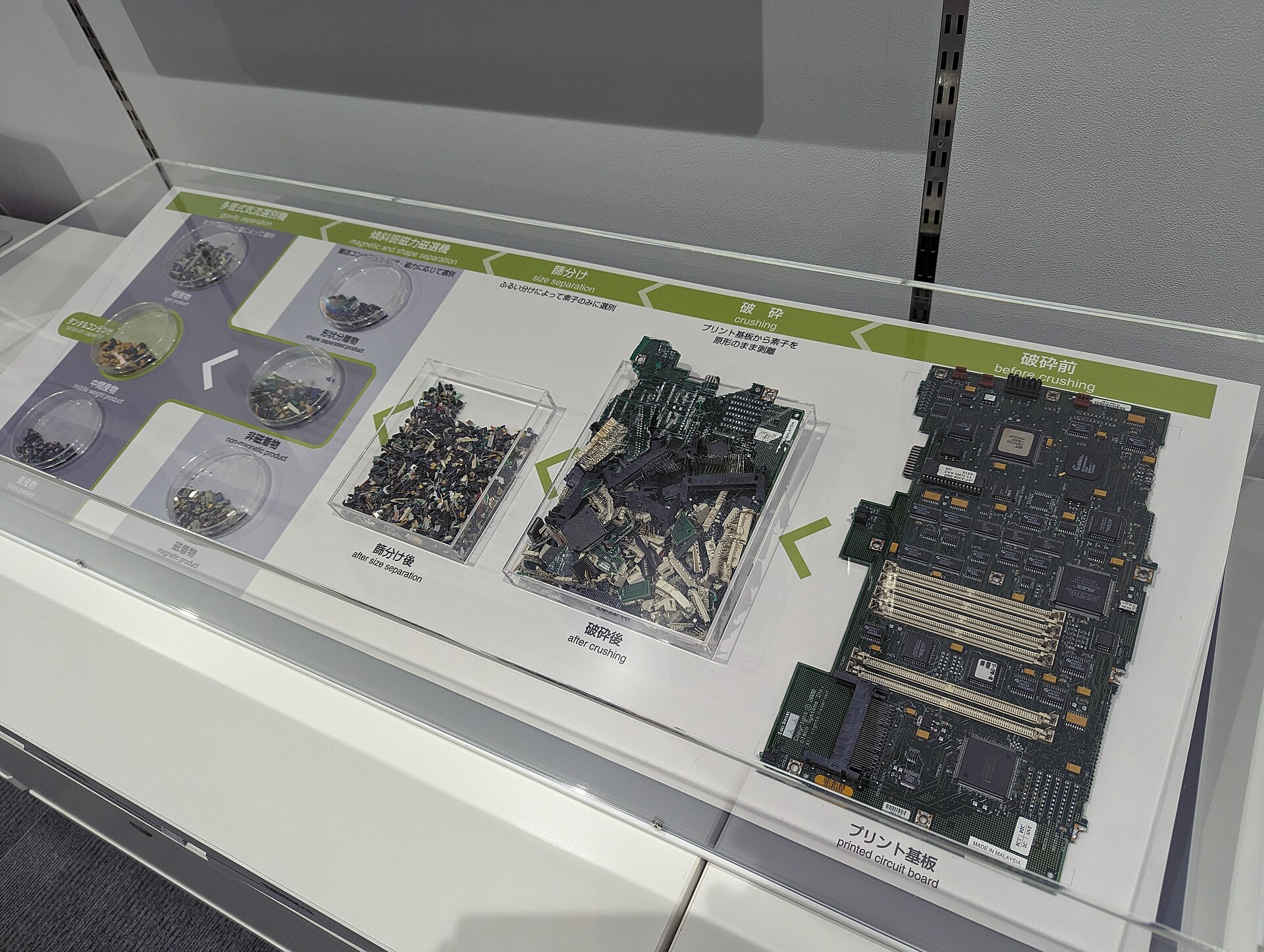
“Recycled” can describe a specific material stream rather than the complete device. A certified processor may recover metals from circuit boards while separating plastics and glass into different routes. Some fractions may be reused, some may be downcycled, and some may still require disposal. A collection receipt or scheme report should identify tonnes collected, the product categories included and the treatment pathway.
Ask whether a provider repairs equipment, dismantles it domestically, exports it for processing or sends mixed material elsewhere. New Zealand requires permits for imports and exports of all electrical and electronic waste, including non-hazardous e-waste, from 25 July 2025. That rule controls transboundary shipments; it does not by itself prove that every local recycler meets a particular environmental or data-security standard. EPA permit guidance (in force from 25 July 2025).
Certification can improve confidence in how a processor manages worker safety, downstream vendors and material flows, but the certificate’s scope still matters. A certified network may accept computers and peripherals while excluding televisions or batteries. A general environmental claim is less useful than a list of accepted devices, processing locations, downstream destinations and audit period.
New Zealand collection routes are product-specific
Collection rules differ by item and location. Check TechCollect's current accepted-items list and locator, then check the local council or retailer for equipment the scheme excludes. The current scheme lists gaming consoles, controllers, monitors and desktop computers, but excludes televisions and batteries; confirm fees or packaging requirements for any other route.
Before travelling to a drop-off point, confirm that the specific model is accepted at that location, its opening arrangements and what happens after collection. A programme that accepts one brand or product group may not accept another, and an old forum post is not reliable evidence of current service.
Data protection is part of responsible reuse
Data-bearing equipment can hold profiles, credentials, payment tokens and unreleased work. Clear accounts and storage before transfer, then choose a route that preserves reuse when secure erasure is possible.
- Personal device: sign out, revoke linked devices, remove removable storage and verify the reset; a PC drive may need separate erasure.
- Organisation: record serial numbers, chain of custody, erasure standard and downstream processors in the recycling contract.
- Unrecoverable storage: document why destruction is needed and request a certificate; wiping a reusable unit can avoid unnecessary shredding.
Design purchases around repair and return
Useful purchase information includes the expected software-support period, availability of controllers and replacement parts, battery replacement route, repair documentation and return conditions. For PC components, check socket, memory, case, power and cooling compatibility. For a console, find out whether storage expansion is standard, whether controllers are repairable and what service exists after the warranty period.
- Keep receipts, model numbers and power adapters with the equipment.
- Separate batteries from general e-waste only when the collection service asks for it.
- Remove personal accounts and storage before resale or donation.
- Ask for a material recovery or secure-destruction record for business equipment.
- Check the latest accepted-item list; scheme boundaries are not interchangeable.
Packaging can determine whether a device survives the trip to its next owner. Protect screens, secure loose parts and label batteries according to the carrier or collector’s rules. A working product that is damaged during a careless move may shift from reuse to recycling, losing the value of its remaining service life.
Measure diversion without overstating it
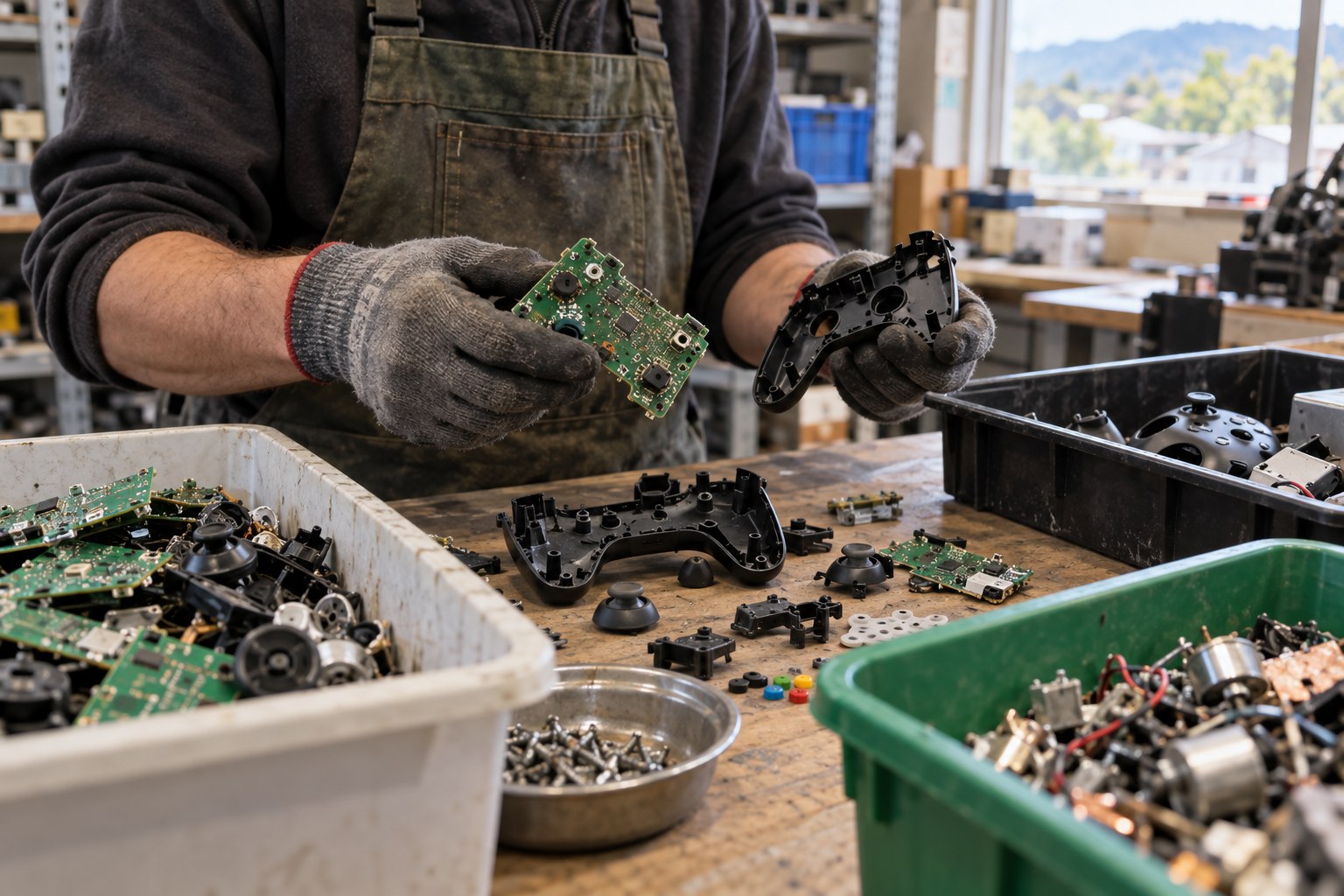
A studio or retailer can track equipment purchased, repaired, redeployed, sold, donated, recycled and sent for disposal. Report each route separately. “Collected” does not mean “recovered”, and the number of items diverted from a bin does not show how much material was returned to production. Weights, product categories and final treatment data make a waste account more useful.
For household equipment, a simple inventory of model, condition, age, repair history and destination makes the next decision easier. A device that has been used for several years can still be unsuitable for a new owner if security updates have ended or essential parts are unavailable. Reuse is strongest when the recipient can use the item safely and when the product has a practical support life remaining.
Console, controller, headset and rechargeable accessory should not share a single recovery code. A repairer may reuse one item, a recycler may dismantle another, and a mixed-load weight cannot show which route each product followed.