
Mobile Gaming's Environmental Impact
Mobile gaming brings a screen, processor, battery, radio and game library into one device. A phone already used for messaging, navigation and work can provide a gaming platform without a separate console. That can avoid purchasing another piece of hardware, yet long play sessions add screen-on time, battery cycles, heat and network activity to a product with many other roles.
The sustainability question is not answered by a phone’s battery indicator. A game can consume energy locally, transfer data, rely on cloud services and encourage device replacement through changing performance demands. Product life, software support and the player’s existing handset are as relevant as electricity per minute of play.
Game workload and display use shape battery demand
Graphics-heavy scenes ask the phone’s processor and graphics hardware to work continuously. Higher frame rates, detailed effects and bright displays tend to raise energy use. A static puzzle screen and a fast 3D action scene create different loads even when both count as one hour of mobile gaming.
Thermal management affects sustained performance. A handset may reduce processor speed as it heats up, while a case or warm room can change heat dissipation. Repeatedly charging during an intense session can add heat to the battery and may affect long-term battery health. The relationship varies by model, battery design and charging profile, so one device’s experience should not be generalized.
Developers can set reasonable frame-rate defaults, reduce unnecessary animation, scale graphics to the device, and avoid processing that is not visible to the player. An optional high-performance mode can preserve quality for users who want it. Clear settings help people select an experience suited to the game and their device without hiding a meaningful change in visual output.
Background activity can outlast the play session
Updates, cloud saves, analytics, offers and multiplayer invitations can wake a phone after play ends. Keep necessary security and account functions, but schedule low-priority tasks and batch transfers where possible. Incremental downloads, compressed assets and selective language packs can reduce large mobile updates and storage pressure.
Analytics also need a privacy and retention decision: collect the events needed for the service, avoid repeated transmissions and keep fraud protections intact. Smaller transfers alone do not establish a lower life-cycle footprint if a game also encourages earlier phone replacement.
Network design changes where work happens
Offline play avoids continuous connectivity where the game permits it; multiplayer and cloud saves still need a network. Cloud gaming shifts rendering from the phone to a server and adds a video stream, so a modest handset can run demanding visuals while data-centre and network workloads grow. Adaptive bit rates can reduce traffic if quality and latency remain suitable.
Megabytes per hour is a useful service measure but not a universal carbon factor. Mobile radio, Wi-Fi, backhaul and shared network equipment have different loads and utilisation. Report traffic and service region, then state any energy model separately.
Frame-rate cap
- Potential benefit
- Limits unnecessary graphics work
- Condition to check
- Gameplay remains responsive for the title
Adaptive assets
- Potential benefit
- Matches resolution and detail to device capability
- Condition to check
- Asset switching does not create excess downloads
Offline mode
- Potential benefit
- Reduces continuous network activity
- Condition to check
- Accounts and saves remain secure and functional
Incremental updates
- Potential benefit
- Transfers only changed files
- Condition to check
- Patch reliability and file integrity are maintained
Cloud rendering
- Potential benefit
- Uses less local compute on capable clients
- Condition to check
- Server, network and data-centre energy are included
Handset life is a major environmental lever
A mobile phone’s material footprint comes mainly from manufacturing and supply chains, including its display, battery, processors, cameras and case. Replacing a phone to improve one game’s performance can trigger a new device footprint that exceeds the energy savings from shorter local processing. The comparison depends on the old phone’s condition, expected remaining life and the amount of gaming it supports.
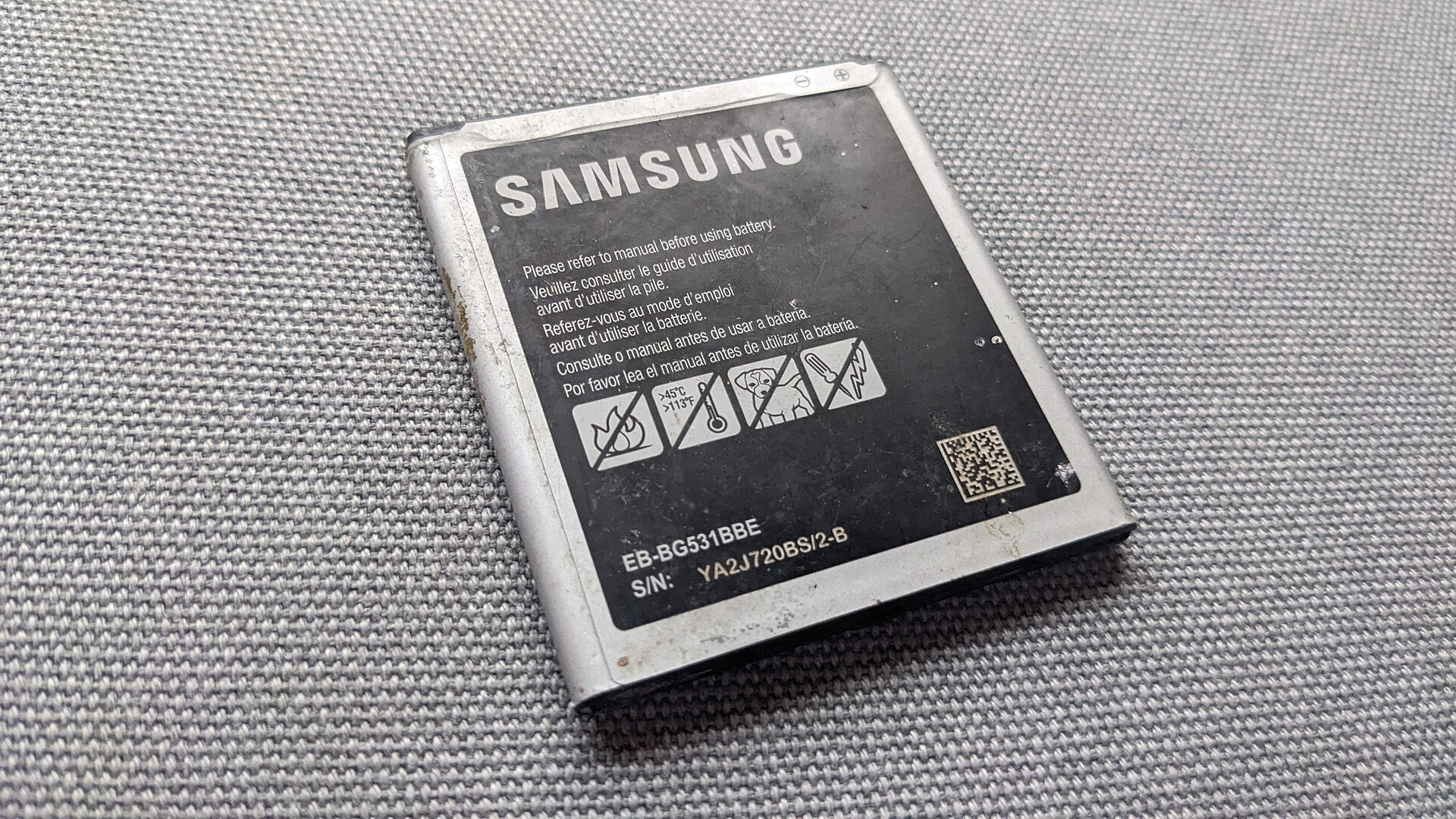
Battery capacity declines with age and use. A serviceable battery can often keep a phone useful after the user experiences shorter play time between charges. Repair options differ by model and region; part availability, adhesive design, diagnostic tools and warranty terms affect cost. Software support matters too, because a capable handset may become unsuitable for online use when security updates stop.
Performance needs should be matched to actual titles. A game’s minimum and recommended specifications can identify whether the current device can provide a safe and usable experience. If frame drops or overheating occur, lower graphics settings may extend use. A new device is more defensible when the old one is unreliable, unsupported or inadequate for essential functions, not merely because a launch model is newer.
Charging and battery care are practical, but limited controls
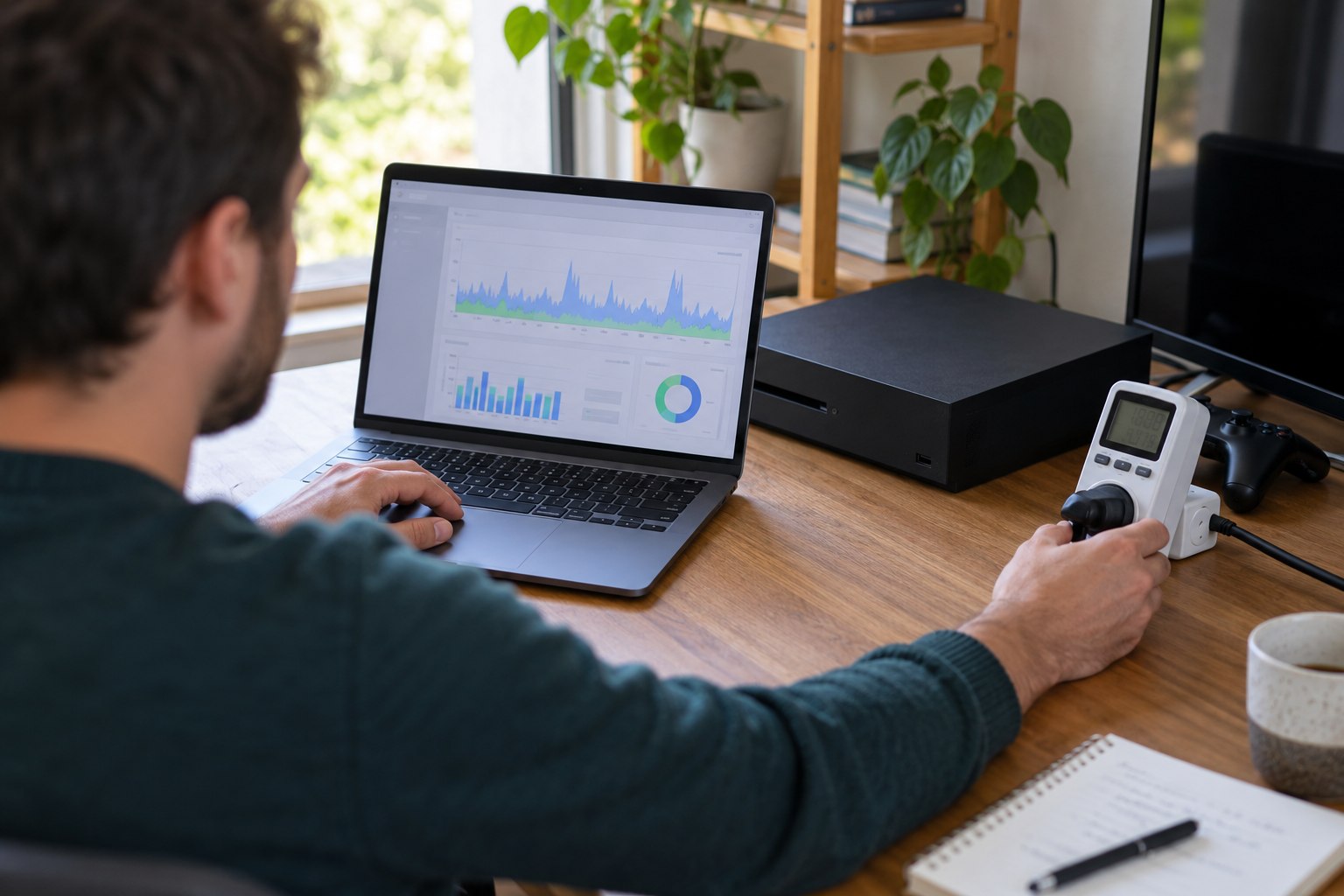
Charging energy is usually small beside the total electricity used by a household, but device use can be measured. A smart plug or energy meter can record charger draw across a full charge, while phone telemetry reports battery use without capturing charger losses. The two values are not equivalent, and battery percentages do not directly translate into wall electricity.
Heat and battery wear affect how long a phone remains useful. During a demanding title, note case temperature and whether the handset throttles, then test a lower frame-rate setting with the same scene. The decision is whether the setting improves comfort and battery run time without making the game unusable; a claim about longer battery life needs an actual service-life record.
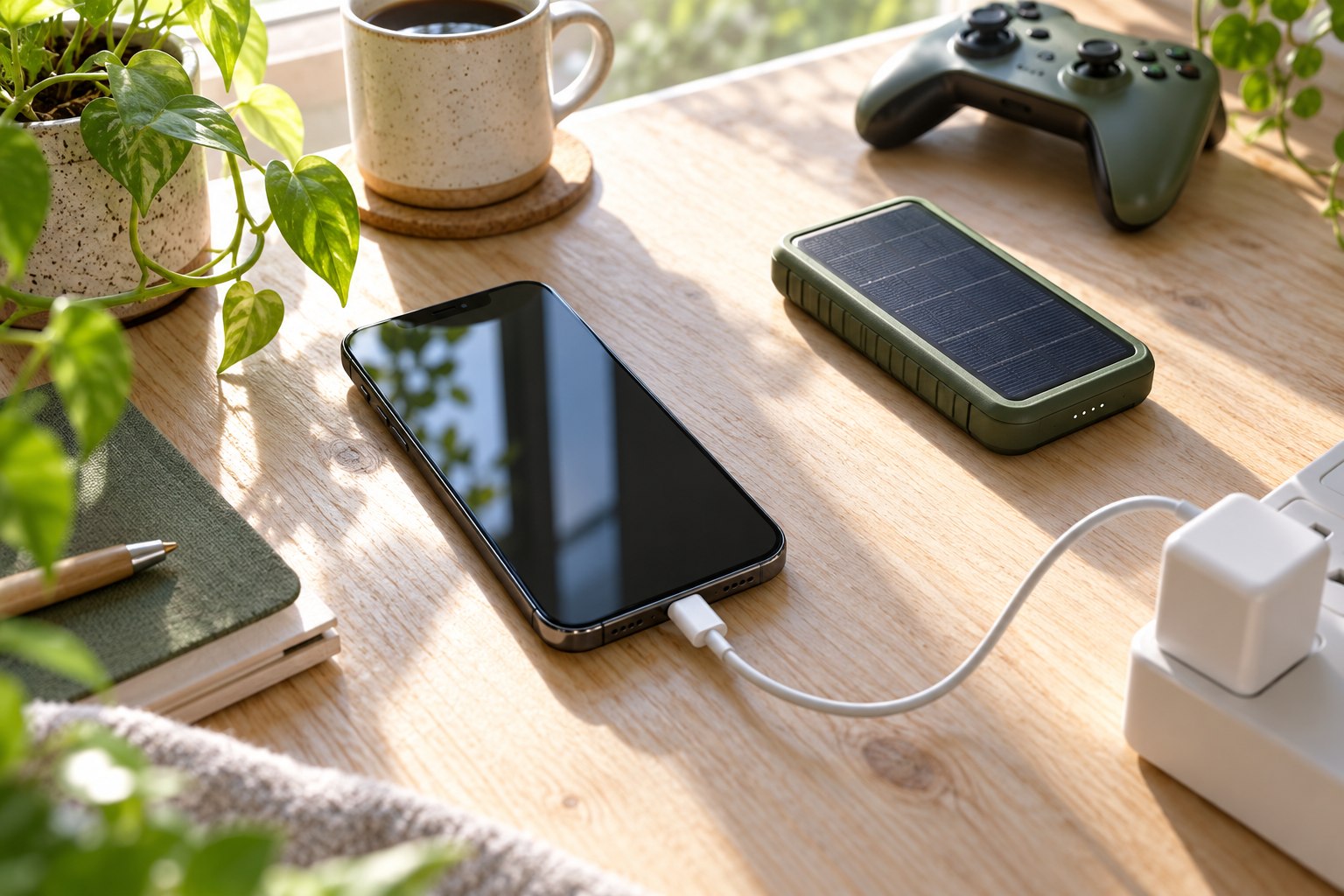
Compare wired and wireless charging only with the same phone, starting charge level and target charge level. A socket meter captures the energy drawn by the charger, including any idle draw after charging ends. One charging test is evidence for that setup, not a universal percentage for every pad or cable.
Mobile game business models influence resource demand
Games can encourage longer sessions through timed events, live content and frequent updates. Environmental performance does not require a judgement about how long a person should play. For platform and developer planning, the relevant measures are energy and data per active hour, total annual service demand, device replacement and server use.
Advertising and analytics can introduce additional network calls and third-party software. A game may load video ads, social feeds, payment services and anti-fraud tools from separate providers. A feature audit can identify which integrations are essential, how much data they transfer and whether repeated requests can be removed. Fewer network requests can improve load time and reduce battery use as well as resource demand.
Live-service games need ongoing content delivery and server operations. A small content update can keep a title fresh without a full reinstall, while a high frequency of large patches can burden storage and mobile data. Expired content should be removable so players do not retain files they no longer use.
New Zealand e-waste options need a current item check
Phones and mobile accessories fall within New Zealand’s broader priority category for electrical and electronic products. Devices may have batteries and materials that need specialist handling, so they should not be placed in ordinary kerbside recycling unless a council explicitly lists them. A working phone may have resale or donation value when accounts are removed and its support status is clear.
A phone’s lithium-ion battery makes its condition important at end of life. Do not place a swollen or damaged phone in household recycling; isolate it from heat and follow the collection provider’s instructions for damaged batteries. Remove the SIM and memory card, sign out of accounts, disable device-finding locks and complete a factory reset before reuse.
Before reuse, remove the SIM and memory card, sign out of accounts, disable device-finding locks and complete a factory reset. Business phones may need verified erasure and asset records. A recycling receipt should not be treated as proof that personal data were securely destroyed unless the service explicitly covers data handling.
Metrics for developers and publishers
- Average battery consumption and device temperature by model class and game mode.
- Data transferred per play hour, update and live event.
- Background network activity when the app is idle or closed.
- Supported handset age, operating-system versions and security-update expectations.
- Cloud compute and delivery data for titles with streamed rendering or live services.
Testing should include older supported devices, not only the latest flagship models. A game that runs efficiently on new hardware but heats older phones may accelerate replacement among the users least able to upgrade. Performance tests can track frame stability, battery drain, temperature and data transfer as separate outcomes.
Support periods set the practical boundary
Mobile game compatibility and handset security support have separate timelines. A game can continue receiving content after a phone stops receiving operating-system updates, or a handset may remain supported after a game’s servers close. Both conditions shape useful life. Clear compatibility policies help owners understand whether their existing device can remain in service.
Long support increases the chance that a product can continue to run games, but it also places obligations on developers and device makers. Account security, payment standards and online services need maintenance. Offline content, local saves and exportable account data can preserve value when a service changes, subject to licensing and security constraints.
Battery-drain figures need their test conditions beside them: screen brightness, audio, network mode, frame cap and in-session downloads. Remove one setting from the record and an hour of play stops being a comparable workload.